
Executive summary
Buying social engagement is no longer a fringe activity. It runs on real infrastructure, a wholesale-to-retail supply chain, and counters that tick into the hundreds of millions of orders. The broad SMM-services market reached roughly $110.7 billion in 2025 and is projected near $400.8 billion by 2033, a ~17.4% CAGR (Cognitive Market Research). Telegram sits at the center of the bought-engagement niche: it crossed 1 billion monthly active users in March 2025, and it is the single most-demanded category on the supply side, accounting for 72% of order volume on the public SocPanel performers board.
The scale of manipulation is now measured, not guessed. Telemetrio’s 2025 study identified 198,979 Telegram channels showing subscriber-manipulation signs, up 120,319 year over year, with betting and casino channels the most-manipulated category. This report synthesizes public platform data, third-party analytics-firm research, fraud and security reporting, peer-reviewed academic work, and our own ground-level view as a provider operating in this market.
A market hiding in plain sight
The market for paid social engagement is large, growing fast, and easy to miss because it operates through plain-looking storefronts. The broad SMM-services market was about $110.7 billion in 2025 and is projected to reach roughly $400.8 billion by 2033 (Cognitive Market Research). The adjacent influencer-marketing industry sat around $32.55 billion in 2025 (Influencer Marketing Hub / Statista). One distinction matters before reading further: those figures cover the whole SMM and influencer economy. Engagement-buying through panels is a subset of it, not the whole.
Telegram is fertile ground for that subset. The platform crossed 1 billion monthly active users in March 2025, up from 950 million the prior July, with 450 to 500 million daily actives and more than 20 million active channels. India is the largest single market at 104 million users, roughly 22% of the base. Two design facts give people a concrete reason to inflate numbers. Every message carries a public per-post view counter, so the credibility signal is visible to anyone. And channels unlock monetization at 1,000 subscribers, with a 50% ad revenue share paid via Toncoin (telegram.org). A visible number tied to a payout threshold is a strong incentive to manufacture the number.
The panel pyramid
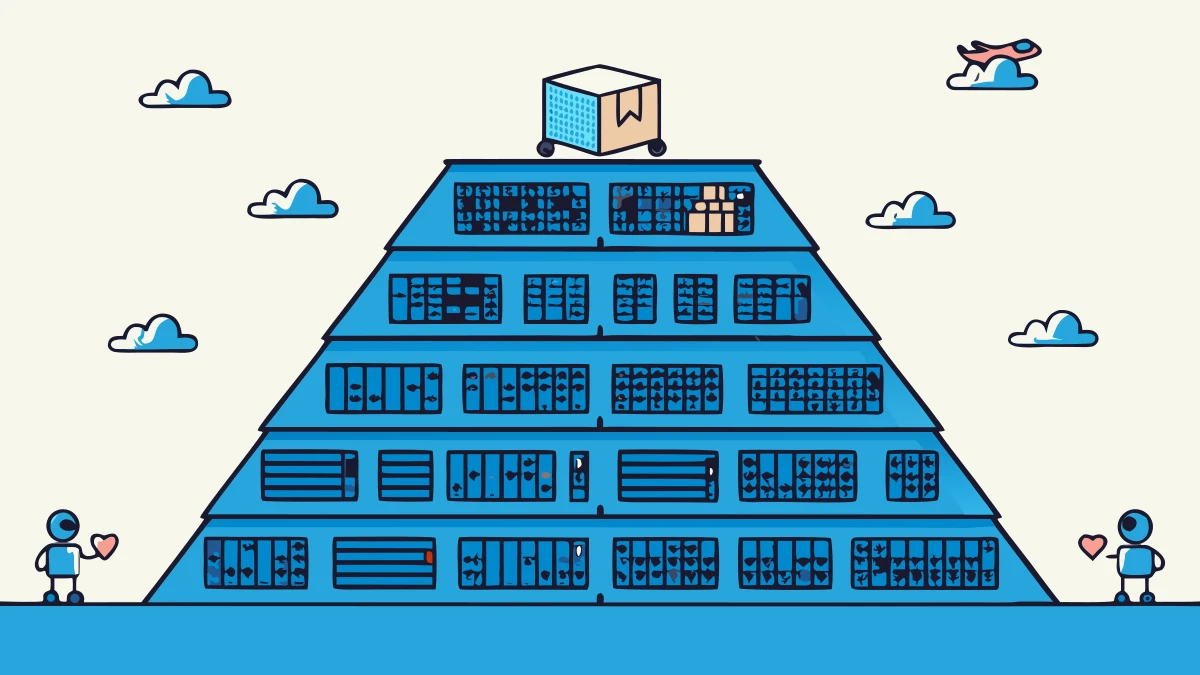
The market looks like retail and runs like wholesale. Public counters from the largest operators let you map the full chain. At the base sits infrastructure: white-label “build your own panel” builders like SocPanel, whose homepage reports 307,000 panels created and 257 million orders processed, with a $10 entry deposit and a 5% commission model. Above that is the wholesale source layer, exemplified by JustAnotherPanel (JAP), whose public counter shows roughly 970 million orders completed, framed as “an order every 0.14 seconds,” with prices “from $0.01/1K.” JAP feeds thousands of retail storefront panels — the branded shops most buyers actually see.
The shop a buyer sees is the thin top of a stack. Underneath sit a wholesale source, the infrastructure that spins up a panel in minutes, and the bot-operators who actually run the accounts that fill the order.
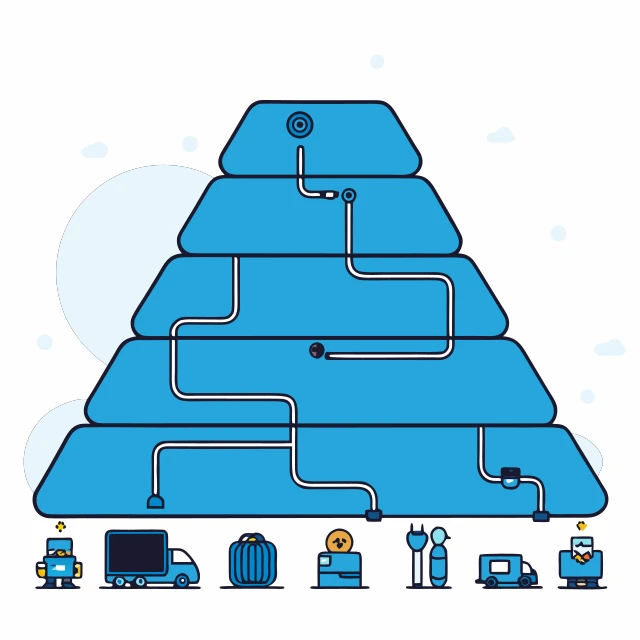
The layer few people know about is delivery. Orders are fulfilled by performers and bot-operators, recruited openly on a public marketplace. The SocPanel performers board lists 35 storefronts that account for about 130 million orders combined, and Telegram is 72% of that volume. The board’s own language asks for performers “with their own software, account base, or rented accounts.” That phrasing is the supply chain stated out loud: the storefront takes the order, the bot-operator delivers it.
Delivery is also concentrated. SocPanel publishes a TOP-100 performer leaderboard ranked by completions. The 100 operators on it have completed about 21.3 million orders combined, the top 10 account for 77% of that, and the leader alone sits near 4 million. Most are multi-year operations, joined two to four years ago, while the bottom ranks are brand-new accounts joining within days. A retail-looking market is fed by a wholesale source and fulfilled by a small, durable set of account-farm operators.
What gets manipulated
The most rigorous public measurement of Telegram manipulation comes from Telemetrio’s “Telegram Market Research 2025,” drawn from a catalog of more than 9.7 million channels. It found 198,979 channels — 1.76% of all channels — showing signs of subscriber manipulation. That is a jump of 120,319 year over year, from 78,660 in 2024 to 198,979 in 2025. Detection combined AI, manual review, and client requests, which means the figure understates rather than overstates the floor.
| Category | Channels with manipulation signs |
|---|---|
| Bets & Casino (grey-market) | 16.80% |
| Economy & Finance (grey-market) | 15.69% |
| Cryptocurrencies (grey-market) | 14.93% |
| News & Media | 7.33% |
| Career | 7.04% |
| Business | 6.06% |
| Marketing & PR | 5.42% |
| Sports | 5.03% |
| Telegram | 4.59% |
| Facts | 4.38% |
| Social Network | 3.73% |
| Technology & Apps | 3.36% |
| Family & Children | 3.00% |
| Real Estate | 2.93% |
The category breakdown tells you who buys. The most-manipulated categories are Bets & Casino at 16.80%, Economy & Finance at 15.69%, and Cryptocurrencies at 14.93%, then a steep drop to News & Media at 7.33% and lower. This matches what we see from the ground: the buyers are overwhelmingly grey-market — betting, casino, crypto, and finance — not mainstream consumer brands. In a channel sample we studied as market research, the same betting-heavy, mostly-not-a-real-business pattern showed up clearly. Two independent datasets, one third-party and one ours, point to the same place.
What it costs
Pricing is a race to the bottom at the wholesale layer and varies wildly at retail. The wholesale floor is “from $0.01/1K,” advertised by JAP as the cheapest reseller source. Cross-platform retail benchmarks put Instagram followers near $0.10 per 1,000, TikTok views near $0.05, YouTube views near $0.09, and Facebook likes near $0.10. Telegram members run about $0.20 at the cheapest end versus roughly $0.80 to $7 elsewhere, while Telegram Premium members plus views sit around $2.5 per 1,000. The cheapest tiers are bot and recycled-account driven; anything “real-looking” or premium costs many times more.
| Platform / tier | Approx. price per 1,000 (USD) |
|---|---|
| Wholesale panel floor | from $0.01 |
| TikTok views | ~$0.05 |
| YouTube views | ~$0.09 |
| Instagram followers | ~$0.10 |
| Facebook likes | ~$0.10 |
| Telegram members (retail) | ~$0.20 – $7 |
| Telegram Premium members + views | ~$2.5 |
Cheap volume comes with a catch, and the catch is retention. Low-cost accounts drop. That single fact explains the market’s core vocabulary: “non-drop” and “refill 30 to 365 days” appear on nearly every listing because buyers have learned that a cheap count erodes. It also explains a paradox. A panel can show roughly 970 million lifetime orders and still average 1.7 out of 5 on independent review platforms (JAP), on the back of drop and unfulfilled-refill complaints. The volume is real; so are the complaints.
Telegram’s crackdown
The platform is pushing back, and the enforcement numbers are now large. Telegram’s own moderation page states it blocks tens of thousands of groups and channels daily, has used machine-learning moderation since 2015, and added AI tools in 2024. Independent security trackers put the 2025 scale higher: Check Point, Cybernews, and The Hacker News report more than 43.5 million channels and groups blocked in 2025, with daily takedowns rising from a 10,000–30,000 baseline to a sustained 80,000–140,000, and single-day peaks above 500,000. Enforcement surged after Pavel Durov’s late-2024 arrest.
There is a direct implication for anyone buying. The cheap, bot-driven end of the market is exactly what large-scale purges target. A subscriber count that jumps overnight is built from the same disposable accounts these sweeps remove, so it can bleed back down as fast as it appeared. The crackdown does not just punish the seller — it quietly erases the buyer’s purchase.
Large-scale sweeps remove exactly the disposable accounts a cheap count is built from. A subscriber number that jumps overnight can bleed back down just as fast when the next purge lands.
The cost of fake
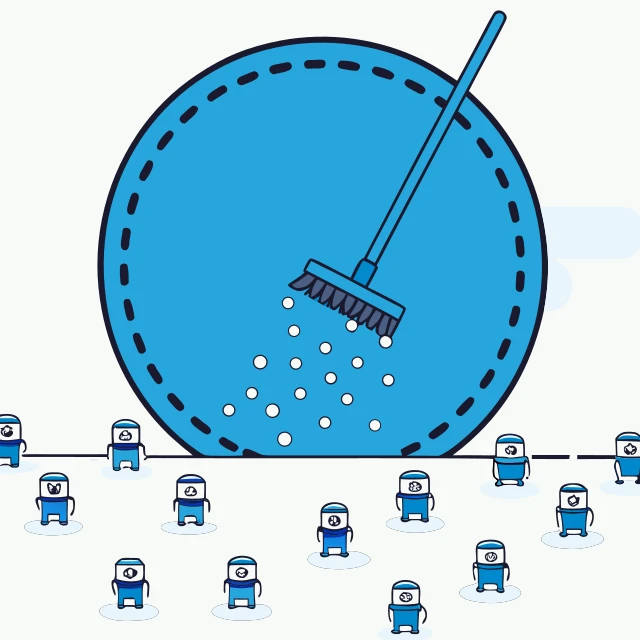
Manipulated engagement carries a measurable price for the people who rely on it. CHEQ and the University of Baltimore estimated influencer-fraud losses at $1.3 billion in 2019, rising to $4.8 billion in 2026. HypeAuditor’s 2026 audit of 8.7 million profiles found 41.3% showing fraud signals, with bot networks making up 58% of detected cases. The Influencer Marketing Hub benchmark attributes 56.5% of reported quality issues to fake or bot followers. Academic work studies the Telegram corner of this directly, including the ACM KDD ’25 TGDataset and Temple University’s “It’s a Trap!” on fake Telegram channels.
More money flows through influence every year, and more of it now gets audited. Anyone evaluating a channel in 2026 is doing it with better tools than existed two years ago.

The takeaway is plain. A bought audience erodes the one thing a channel actually sells, which is trust, and detection is improving rather than fading. The fraud-loss line is climbing because more money flows through influence, and because more of that money now gets audited. Anyone evaluating a channel in 2026 is doing it with better tools than existed two years ago.
What this means for a real channel owner
Read these patterns as a map of what not to copy. Most bought Telegram engagement is grey-market and disposable, and it lives in betting, casino, and crypto channels rather than in durable, real projects. The numbers that get a channel caught are the unrealistic ones: a count that jumps overnight, a view total wildly out of proportion to subscribers and reactions, an audience that never reacts or forwards. Detection tools and ordinary readers both catch the same tells.
We operate in this market, so here is the only honest recommendation it supports. If a channel uses bought views or subscribers at all, the defensible approach is a temporary, believably-sized social-proof floor while real content does the work, with numbers kept in proportion to each other. Wild ratios are the giveaway; proportion is the discipline that survives both a purge and a reader’s second glance. For the practical version, see our guide to spotting a fake channel and our honest guide to growing subscribers.
How this was put together
This report synthesizes public platform data, third-party analytics-firm research (Telemetrio, TGStat), market-research and fraud reports, security-firm tracking, peer-reviewed academic work, and our own ground-level observations as a provider operating in this market. Every market figure cited here is third-party or public and attributed inline; our own data appears only as clearly labeled qualitative commentary, never as a published commercial metric. All figures are point-in-time as of mid-2026, and live counters move, so treat the order totals and channel counts as snapshots rather than fixed values.
Frequently asked questions
- How big is the Telegram engagement-buying market?
- The broad SMM-services market reached about $110.7 billion in 2025 and is projected near $400.8 billion by 2033, a ~17.4% CAGR (Cognitive Market Research). Engagement-buying through panels is a subset of that, but its scale is visible in public order counters: a single wholesale source, JustAnotherPanel, reports roughly 970 million orders completed.
- What share of Telegram channels have fake or manipulated subscribers?
- Telemetrio’s 2025 study of more than 9.7 million channels found 198,979, about 1.76% of all channels, showing signs of subscriber manipulation — up 120,319 year over year from 78,660 in 2024. Detection combined AI, manual review, and client reports, so it reads as a conservative floor.
- Which Telegram channels most often buy fake engagement?
- By category the most-manipulated are Bets & Casino at 16.80%, Economy & Finance at 15.69%, and Cryptocurrencies at 14.93%, dropping to News & Media at 7.33% and below (Telemetrio, 2025). The pattern is consistently grey-market — betting, casino, crypto, and finance — rather than mainstream consumer brands.
- How do SMM panels actually deliver Telegram engagement?
- Through a pyramid. Infrastructure builders like SocPanel (307,000 panels created) sit at the base, a wholesale source like JustAnotherPanel (about 970 million orders) feeds the middle, thousands of retail storefronts sell to buyers, and a concentrated set of bot-operators fulfils the orders. On SocPanel’s performers board, Telegram is 72% of order volume.
- How much does it cost to buy Telegram members or views?
- The wholesale floor is "from $0.01 per 1,000" (JustAnotherPanel). At retail, Telegram members range from about $0.20 to $7 per 1,000 depending on quality, and Premium members plus views sit near $2.5 per 1,000. The cheapest tiers are bot or recycled-account driven, which is why they tend to drop.
- Is buying Telegram engagement safe, and does it last?
- Often it does not last. Cheap counts are built from disposable accounts, which is why "non-drop" and "refill 30 to 365 days" dominate the market’s vocabulary. Independent trackers report more than 43.5 million Telegram channels and groups blocked in 2025 (Check Point, Cybernews, The Hacker News), and large-scale purges remove exactly the kind of accounts a cheap count is made of.
Sources
- [Analytics]Telemetrio — Telegram Market Research 2025 (198,979 manipulated channels; category breakdown)
- [Analytics]TGStat — Telegram channels & groups catalog and analytics
- [Market research]Cognitive Market Research — Social Media Marketing (SMM) Service Market
- [Market research]Grand View Research — Influencer Marketing Platform Market
- [Market research]Mordor Intelligence — Influencer Marketing Market
- [Fraud]CHEQ × University of Baltimore — influencer-fraud economic-loss report (via CBS News)
- [Fraud]Business of Fashion — Influencer Fraud Is a Billion-Dollar Problem
- [Fraud]Influencer Marketing Hub — Benchmark Report 2026 (fraud share of quality issues)
- [Telegram official]Telegram — Safety / Moderation Overview (daily takedowns, ML/AI moderation)
- [Telegram official]Telegram — Monetization for Channels (1,000-subscriber gate, 50% rev-share)
- [Security]Check Point Research — Telegram crackdown 2026 (43.5M channels blocked in 2025)
- [Security]Cybernews — Telegram record takedowns
- [Security]The Hacker News — Telegram’s crackdown changed how threat actors act
- [Security]Securelist (Kaspersky) — Telegram phishing bots and channels
- [Academic]La Morgia et al. — TGDataset (ACM KDD ’25); arXiv 2303.05345
- [Academic]“An analysis of fake social media engagement services” — Computers & Security (ScienceDirect)
- [Academic]“It’s a Trap! Detection and Analysis of Fake Channels on Telegram” — Temple University, IEEE ICWS
- [Panel]JustAnotherPanel — public order counter and pricing
- [Panel]SocPanel — white-label panel builder + performers marketplace
- [Stats]RichAds — Telegram statistics 2025 (1B MAU, revenue)
Cite this report as: “The State of the Telegram Engagement Market 2026,” Telegram.Software. Licensed CC BY 4.0 — quote any figure with attribution and a link to this page.